When Farley Mowat was five
The Catfish in the Toilet
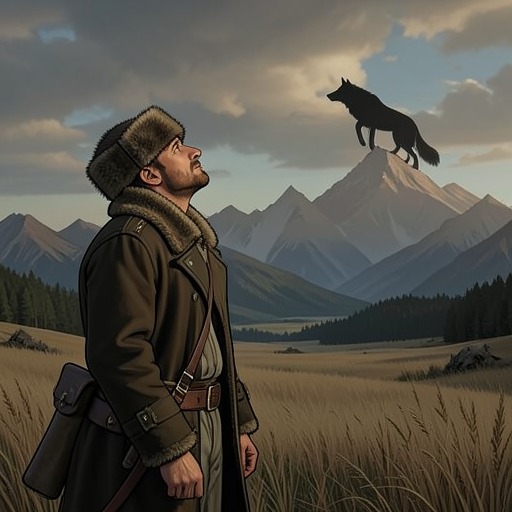
While staying with his grandparents in [Oakville](entity:location-recall-location-oakville-0d2726cde687), [Farley Mowat](entity:character-recall-character-farley-mowat-475ef9323420) found three catfish gasping in a stagnant pool. Unable to watch them die, he carried them home and, with no suitable container, lodged them overnight in his grandmother’s toilet.
His grandmother encountered the fish during a nighttime visit and was so appalled that she avoided fish thereafter. His cousin flushed them, but the incident left Farley Mowat with a lasting affinity for animals and, in his telling, began the path that eventually led to the Arctic.
During his youth and university years
A Naturalist Among Specialists
[Farley Mowat](entity:character-recall-character-farley-mowat-475ef9323420) learned natural history from eccentric and devoted observers, including an amateur mammalogist who studied pocket gophers and a professor whose specialty was shrew reproductive anatomy. Their enthusiasm confirmed his fascination with living animals, while also introducing him to the oddities of scientific life.
At university, he resisted narrowing his interests to a single specialty and disliked the growing preference for statistical and laboratory work over observing animals in their habitats. With few professional prospects, he accepted a government post, a choice that would bring him into conflict with the bureaucracy he later lampooned.
Early in Farley Mowat’s government career
The Lupine Assignment
The [Dominion Wildlife Service](entity:organization-recall-organization-dominion-wildlif-b785eaea7ad5) hired [Farley Mowat](entity:character-recall-character-farley-mowat-475ef9323420) and summoned him to [Ottawa](entity:location-recall-location-3d614a6accf5), where military titles, rigid hierarchy, and elaborate paperwork shaped daily life. During a meeting about his first field assignment, he broke into laughter at a budget discussion over toilet paper and watched senior officials leave in offended silence.
His chief explained that political complaints about wolves killing [Caribou](entity:creature-recall-creature-caribou-c096bfb3651b) had become a national problem. After the department’s previous explanation—that human hunters were largely responsible for fewer deer—had provoked a parliamentary uproar, the government ordered a full investigation and made the wolf Farley Mowat’s responsibility.
Immediately after the assignment
The Impossible Orders
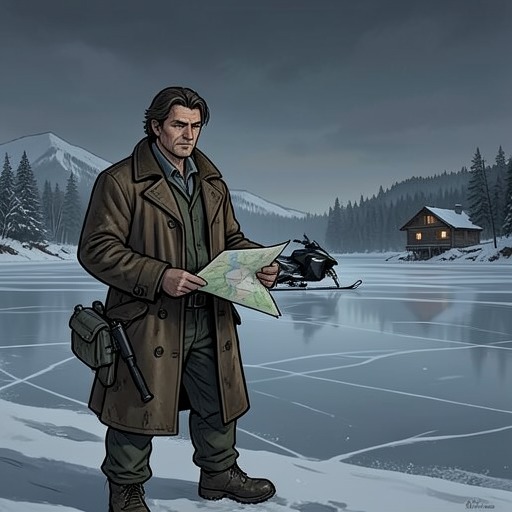
[Farley Mowat](entity:character-recall-character-farley-mowat-475ef9323420)’s operation orders told him to travel from [Churchill](entity:location-recall-location-churchill-8ccaee5d516d) in a suitable direction, locate a place with enough wolves, establish a base, and conduct a statistically meaningful survey. The instructions were emphatic but offered no usable destination or practical advice.
He boarded an overloaded military transport with an arsenal, scientific equipment, and mismatched sections of a canoe. The pilot was baffled by the cargo, especially the cans of alcohol intended to preserve specimens, but carried Farley Mowat north toward the starting point of his assignment.
During Farley Mowat’s enforced stay in Churchill
Wolf Lore in Churchill
In [Churchill](entity:location-recall-location-churchill-8ccaee5d516d), [Farley Mowat](entity:character-recall-character-farley-mowat-475ef9323420) struggled to find a pilot willing to take him into an unknown part of the wilderness. When he asked [Ottawa](entity:location-recall-location-3d614a6accf5) for help, the department insisted that his vague orders were perfectly clear and warned him to keep paid radiograms to ten words.
While waiting, he collected local stories about [Wolves](entity:creature-recall-creature-wolves-f665b9881f25), including extravagant claims about attacks, strange diseases, and the destruction of [Caribou](entity:creature-recall-creature-caribou-c096bfb3651b). A trapper introduced him to wolf-juice, a potent mixture of beer and alcohol; Farley Mowat later discovered that laboratory alcohol made an even better version.
Late May, shortly before the field journey
The Lost Pilot Arrives
A storm-bound, decrepit aircraft landed by accident near [Churchill](entity:location-recall-location-churchill-8ccaee5d516d), piloted by a former RAF airman who had become lost while trying to reach The Pas. When he heard that [Farley Mowat](entity:character-recall-character-farley-mowat-475ef9323420) needed to reach wolf country, he offered to fly northwest, where his unreliable compass worked best.
The plane could carry only a fraction of the supplies. Farley Mowat traded alcohol for a usable canoe and secretly packed his treasured beer beneath the aircraft, then boarded with the pilot and mechanic for a flight into the unknown.
Late May
Abandoned on the Lake
Cloud, failing hydraulics, and an overloaded aircraft made the journey precarious. After hours of flying low through fog, the pilot suddenly landed on a frozen lake in a remote valley and told [Farley Mowat](entity:character-recall-character-farley-mowat-475ef9323420) to unload quickly; he estimated their position only roughly and admitted that he did not know exactly where they were.
The plane lifted away, leaving Farley Mowat with his equipment on the ice and no dependable transport. His supposed permanent base was stranded on a lake still locked in winter, while the orders required him to survey the country by canoe and find the study animals.
The first evening after the landing
A Call Reaches Peru
Trying to obtain new instructions, [Farley Mowat](entity:character-recall-character-farley-mowat-475ef9323420) set up the short-range radio supplied by the department. Its call sign was Daisy Mae, and after a long silence he unexpectedly reached an amateur operator in Peru through atmospheric wave skip.
The message, garbled by translation and forwarded through diplomatic channels, made [Ottawa](entity:location-recall-location-3d614a6accf5) suspect that an agent was operating near Tierra del Fuego. Farley Mowat never received the urgent orders sent back toward him: his radio batteries soon failed, and the only later broadcast he picked up came from Moscow.
That first night on the lake
The False Wolf Pack
As darkness fell, [Farley Mowat](entity:character-recall-character-farley-mowat-475ef9323420) heard what he believed was a huge pack of [Wolves](entity:creature-recall-creature-wolves-f665b9881f25) approaching his equipment. Convinced by the sound and his own reading that he might be facing hundreds of predators, he hid beneath his upturned canoe and wished he were a pregnant Eskimo, recalling one of [Churchill](entity:location-recall-location-churchill-8ccaee5d516d)’s stories about wolf behavior.
A young man in caribou furs appeared among the animals, followed by fourteen formidable Huskies. The supposed wolf pack was [Mike](entity:character-recall-character-mike-cb6fa8ab1468)’s dog team, and Farley Mowat’s first apparent contact with the study species had instead brought him to the only nearby human resident.
The first days at the cabin
Mike’s Cabin and the Autopsy
[Mike](entity:character-recall-character-mike-cb6fa8ab1468) brought [Farley Mowat](entity:character-recall-character-farley-mowat-475ef9323420) to his cabin and agreed, for a small fee, to provide lodging and help. His assistance saved the government equipment from being stranded when the lake ice melted, and his cabin became a practical base for the research.
Farley Mowat’s demonstrations of cyanide traps, specimen preparation, and autopsy instruments increasingly alarmed Mike. After seeing a dissected human abdomen in a textbook, Mike fled with his dogs, claiming that he had to visit his sick mother. Farley Mowat was left alone, still unaware how completely he had frightened his new acquaintance.
Shortly after the spring thaw
The First Wild Wolf
With the river flooding and then carrying refuse into [Mike](entity:character-recall-character-mike-cb6fa8ab1468)’s cabin, [Farley Mowat](entity:character-recall-character-farley-mowat-475ef9323420) moved his camp to a gravel ridge. One night, hearing mournful cries across the river, he assumed a lost Husky puppy was calling for help and paddled over to find it.
Instead, he crept over a ridge and found himself six feet from a full-grown Arctic wolf. The animal sprang away and vanished, while Farley Mowat hurried back to shelter. The encounter brought his first close look at a wild wolf and made the difference between textbook reputation and lived experience suddenly urgent.
The morning after the first close encounter
Tracks Across the Muskeg
[Farley Mowat](entity:character-recall-character-farley-mowat-475ef9323420) returned to the spot where the wolf had disappeared and found enormous paw prints crossing the muskeg. Their size and long stride gave the animal a daunting physical scale, and he turned back after realizing he had no compass.
Later, after recovering the compass from the cabin, he followed the trail again. The tracks led him to a lake and a high sand esker, where he spotted two [Wolves](entity:creature-recall-creature-wolves-f665b9881f25) playing together and discovered that the female had disappeared into a den.
During the first week of observation
The Wolves at Play
[Farley Mowat](entity:character-recall-character-farley-mowat-475ef9323420) watched the male and female romp over the esker, chasing and nipping each other like young dogs. When the female went into the den, he rushed closer to improve his view, prompting the male to stand watch over the slope with an imposing, threatening presence.
From a distance, the scene unsettled the familiar image of the wolf as a savage killer. Farley Mowat began to suspect that the animals might be less aggressive than he had been taught, though he was not yet ready to discard the accepted myth.
The next morning
The Watcher Watched
[Farley Mowat](entity:character-recall-character-farley-mowat-475ef9323420) returned with a telescope and hid behind a rocky knoll, expecting to observe the [Wolves](entity:creature-recall-creature-wolves-f665b9881f25) without being noticed. After hours of searching an apparently empty esker, he stood to relieve himself and discovered the pair sitting just behind him, calmly watching.
Embarrassed and indignant, he shouted at them to go away. They trotted off without looking back, leaving him to wonder whether he or the Wolves had been observing whom. The reversal challenged his assumption that scientific equipment and human intelligence automatically made him the dominant observer.
The following day
The Den and Its Pups
[Farley Mowat](entity:character-recall-character-farley-mowat-475ef9323420) climbed the esker to inspect the den and found four round, gray pups wrestling near its entrance. A sudden warning howl sent them scrambling underground, while Farley Mowat lost his footing and slid down the steep sand slope in a flailing, undignified tumble.
Three adult [Wolves](entity:creature-recall-creature-wolves-f665b9881f25) watched from above as he struggled to recover. His attempt to raise a sand-clogged rifle failed, and their composure made the incident feel less like a narrow escape than a humiliating encounter. That evening, wolf-juice helped him admit how thoroughly the animals had unsettled his inherited beliefs.
The morning after the dune incident
Choosing the Wolves’ World
[Farley Mowat](entity:character-recall-character-farley-mowat-475ef9323420) reviewed the [Wolves](entity:creature-recall-creature-wolves-f665b9881f25)’ repeated restraint, even when he had approached their den and pups, and recognized how much he still clung to the conventional story of their ferocity. The myth protected his sense of adventure and his professional assumptions, but his own observations had begun to contradict it.
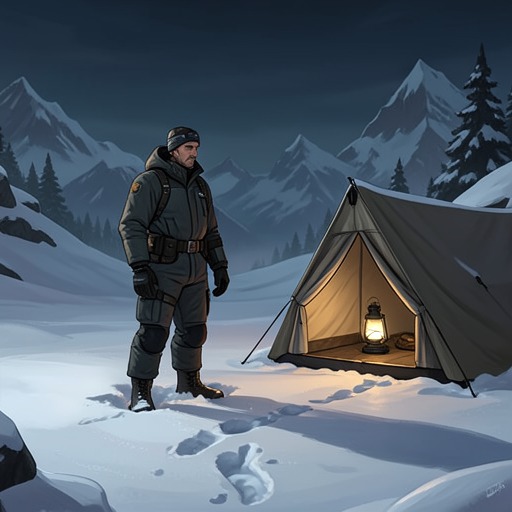
He decided to study the animals without forcing them into preconceived roles. Leaving [Mike](entity:character-recall-character-mike-cb6fa8ab1468)’s increasingly foul cabin, he pitched a small tent across the bay, abandoned his weapons, and set up his telescope so that he could watch the den while remaining unobtrusive.
During the first weeks at the observation tent
Marking a Human Territory
[Farley Mowat](entity:character-recall-character-farley-mowat-475ef9323420) noticed that the [Wolves](entity:creature-recall-creature-wolves-f665b9881f25) moved through a settled territory with clear boundaries, which the family periodically marked. Hoping to make them acknowledge him, he staked out a small claim around his tent and marked it repeatedly through the night.
When [George](entity:character-recall-character-george-4ccc9776b2d0) encountered the boundary, he stopped, investigated, and then marked the outside of Farley Mowat’s line with economical precision. The encounter established a quiet accommodation: the Wolves respected the human enclave, and Farley Mowat began to understand territorial marking as a social convention rather than evidence of ceaseless aggression.
Early in the summer
George and Angeline’s Family
As [Farley Mowat](entity:character-recall-character-farley-mowat-475ef9323420) watched the family’s daily routine, he named the silver-white father [George](entity:character-recall-character-george-4ccc9776b2d0) and the slim, white mother [Angeline](entity:character-recall-character-angeline-359f8a3b0e41). Their affectionate reunions, devotion to the pups, and apparent lifelong partnership gradually gave the animals individual character in his eyes.
A third adult, smaller and more gray-coated than George, repeatedly helped Angeline with the pups. Farley Mowat called him [Uncle Albert](entity:character-recall-character-uncle-albert-1e324169f8b8) after watching him protect the youngsters from their mother’s relentless play and then patiently join in their games. The apparent extra adult, once a puzzle, became evidence of cooperative care within the family.
Late June and early July
The Wolves Hunt Mice
When the migrating [Caribou](entity:creature-recall-creature-caribou-c096bfb3651b) moved north, [Farley Mowat](entity:character-recall-character-farley-mowat-475ef9323420) could not understand how the family remained well fed. The adult [Wolves](entity:creature-recall-creature-wolves-f665b9881f25) went out hunting nightly and returned without visible prey, while a gift of bread left by Farley Mowat was ignored.
He then watched [Angeline](entity:character-recall-character-angeline-359f8a3b0e41) stalk through the grass and pounce repeatedly, swallowing [Mice](entity:creature-recall-creature-mice-f312214480dd) that were almost invisible to him. She caught more than twenty in one outing, revealing that small rodents could provide substantial nourishment when larger prey was absent. This discovery overturned his assumption that Wolves depended exclusively on large game.
During the summer mouse survey
George’s Mousetrap Mishap
To document the small-mammal population, [Farley Mowat](entity:character-recall-character-farley-mowat-475ef9323420) set roughly 150 traps in a bog that the [Wolves](entity:creature-recall-creature-wolves-f665b9881f25) used for hunting. [George](entity:character-recall-character-george-4ccc9776b2d0) entered the area and headed toward a cluster of traps before Farley Mowat could stop him.
George triggered several at once and bolted home, yipping and shedding the traps. Farley Mowat feared the mishap might damage their relationship, but George seemed to accept it as a crude human joke. The accident also showed how easily scientific sampling could interfere with the animals being studied.
During the summer
The Mouse-Eating Experiment
To test whether a rodent diet could sustain a large carnivore, [Farley Mowat](entity:character-recall-character-farley-mowat-475ef9323420) used himself as an experimental subject. He cooked and ate the small animals, eventually developing a recipe he called [Souris à la Crême](entity:object-recall-object-souris-la-cr-me-f924638babc7), and recorded his condition during the trial.
At first he removed the mice’s abdominal fat, then realized that the [Wolves](entity:creature-recall-creature-wolves-f665b9881f25) ate the entire animal and corrected his mistake. His experiment could not prove exactly how Wolves metabolized their food, but it gave him a practical way to examine the nutritional plausibility of their summer diet.
Toward the end of the mouse-diet trial
Ootek Joins the Study
[Mike](entity:character-recall-character-mike-cb6fa8ab1468) returned to his cabin with his cousin [Ootek](entity:character-recall-character-ootek-bb50c3fa04d7), who was initially reserved but soon showed an unusual interest in [Farley Mowat](entity:character-recall-character-farley-mowat-475ef9323420)’s work. Ootek believed that his personal helping spirit was Amarok, the Wolf Being, and regarded [Wolves](entity:creature-recall-creature-wolves-f665b9881f25) as relations rather than monsters.
Unlike the researcher, Ootek had grown up with knowledge of local animals and their habits. He helped explain the Wolves’ use of rodents, ground squirrels, and fish, and became a trusted companion and field guide. Farley Mowat found that Ootek’s observations, when they could be checked, were consistently reliable.
After Ootek began helping with the research
Ootek’s Caribou Story
[Ootek](entity:character-recall-character-ootek-bb50c3fa04d7) described a traditional account in which the wolf was given a role in keeping the [Caribou](entity:creature-recall-creature-caribou-c096bfb3651b) strong by removing the weak and sick. Its central idea—that predation could help preserve prey populations—surprised [Farley Mowat](entity:character-recall-character-farley-mowat-475ef9323420), who still doubted that [Wolves](entity:creature-recall-creature-wolves-f665b9881f25) would pass up healthy, accessible animals.
When challenged about the many Caribou skeletons near [Mike](entity:character-recall-character-mike-cb6fa8ab1468)’s cabin, Mike admitted that he killed hundreds of deer in some years to feed his dogs and supply his trapping work. He explained that other trappers did the same, despite denying large kills to officials. Farley Mowat calculated that human hunting could account for a major annual toll, exposing a discrepancy between public blame and private practice.
During the summer observation period
Messages Across the Tundra
[Ootek](entity:character-recall-character-ootek-bb50c3fa04d7) claimed that [Wolves](entity:creature-recall-creature-wolves-f665b9881f25) could communicate over great distances, passing information about prey and travelers from one territory to another. [Farley Mowat](entity:character-recall-character-farley-mowat-475ef9323420) initially treated the claim as a fanciful story, even when Ootek said that a distant Wolf had reported [Caribou](entity:creature-recall-creature-caribou-c096bfb3651b) moving south.
[Mike](entity:character-recall-character-mike-cb6fa8ab1468) followed the report and returned with Caribou from the location Ootek had predicted. Later, Ootek anticipated the arrival of human visitors after hearing Wolves report their movements. These episodes persuaded Farley Mowat that animal communication might be more complex than he had assumed, although he could not personally verify everything Ootek understood.
Late June
The Pups’ Summer Den
[Angeline](entity:character-recall-character-angeline-359f8a3b0e41) began joining [George](entity:character-recall-character-george-4ccc9776b2d0) and [Uncle Albert](entity:character-recall-character-uncle-albert-1e324169f8b8) on short excursions, and one evening she finally went off hunting with George while Uncle Albert stayed behind with the pups. In the morning, [Farley Mowat](entity:character-recall-character-farley-mowat-475ef9323420) saw the adult [Wolves](entity:creature-recall-creature-wolves-f665b9881f25) keeping watch as Angeline carried each pup away from the original den.
[Ootek](entity:character-recall-character-ootek-bb50c3fa04d7) explained that the pups had been weaned, had outgrown the den, and needed access to water and room to learn. The family moved them to a boulder-filled ravine with a stream and abundant [Mice](entity:creature-recall-creature-mice-f312214480dd), where the youngsters could safely explore and begin their education.
During the discussion of the new summer den
The Adoption of Orphaned Pups
[Ootek](entity:character-recall-character-ootek-bb50c3fa04d7) told [Farley Mowat](entity:character-recall-character-farley-mowat-475ef9323420) about a Wolf whose mate had been killed by a passing hunter. Rather than leave the widowed father with orphaned pups, another adult Wolf helped carry the young to a nearby den belonging to a female with a litter of her own.
The receiving family accepted the newcomers, and the adults raised the combined group together. Farley Mowat initially hesitated to trust the account, but later heard of a similar case from a white naturalist. The story reinforced the idea that the wolf family could extend beyond a single breeding pair and its biological offspring.
After the dogs returned with the Caribou
Albert and Kooa
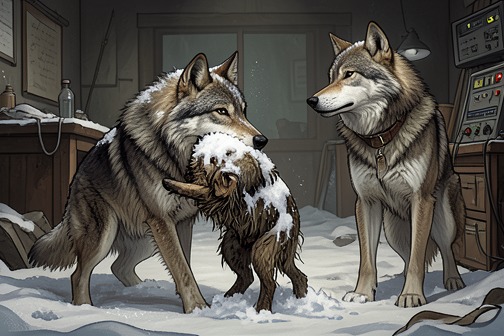
When [Mike](entity:character-recall-character-mike-cb6fa8ab1468)’s [Husky dogs](entity:creature-recall-creature-husky-dogs-644cbaeecb17) came back to the area, one of the bitches, [Kooa](entity:character-recall-character-kooa-9a150704140f), entered heat. [Farley Mowat](entity:character-recall-character-farley-mowat-475ef9323420) saw a chance to observe the [Wolves](entity:creature-recall-creature-wolves-f665b9881f25)’ sexual behavior and arranged for Kooa to be tethered where the adults could find her.
[George](entity:character-recall-character-george-4ccc9776b2d0) approached, but [Angeline](entity:character-recall-character-angeline-359f8a3b0e41) intercepted him, leaving [Uncle Albert](entity:character-recall-character-uncle-albert-1e324169f8b8) to court Kooa. After an awkward display that [Ootek](entity:character-recall-character-ootek-bb50c3fa04d7) recognized as normal courtship, the pair mated. Kooa later returned to the dog team, and [Albert](entity:character-recall-character-albert-6190c3a74040) rejoined his family, making the encounter a brief crossing of the domestic and wild worlds.
During the summer at the ravine den
The Meat Delivery
[Farley Mowat](entity:character-recall-character-farley-mowat-475ef9323420) hid near the summer den to watch the pups while the adults were away. When [Angeline](entity:character-recall-character-angeline-359f8a3b0e41) returned, the youngsters crowded around her, and she regurgitated a large meal of partly digested meat for them.
As the pups ate and slept, Farley Mowat’s stomach began to rumble loudly. Angeline woke, tried to locate the mysterious sound, and eventually found him hidden nearby. She bared her teeth in apparent disdain and led the pups away, leaving Farley Mowat embarrassed by an encounter he could neither explain nor conceal.
During the July lull
Visitors from Hidden Valley
Two unfamiliar [Wolves](entity:creature-recall-creature-wolves-f665b9881f25) approached the summer den while [Angeline](entity:character-recall-character-angeline-359f8a3b0e41) was there. Instead of driving them away, she greeted them, played with one, and allowed the other to descend into the ravine where the pups were sheltered.
[Ootek](entity:character-recall-character-ootek-bb50c3fa04d7) considered the visit unremarkable, and [Mike](entity:character-recall-character-mike-cb6fa8ab1468) identified the visitors as members of a nearby group related to Angeline. The encounter showed [Farley Mowat](entity:character-recall-character-farley-mowat-475ef9323420) that neighboring families could visit peacefully and that their relationships were more fluid than his territorial assumptions had allowed.
Mid-July, after Farley Mowat resumed traveling
The Wolves Herd Caribou
[Farley Mowat](entity:character-recall-character-farley-mowat-475ef9323420) and [Ootek](entity:character-recall-character-ootek-bb50c3fa04d7) left the observation post to survey the wider tundra. On one excursion, Farley Mowat watched three adult [Wolves](entity:creature-recall-creature-wolves-f665b9881f25) move through [Caribou](entity:creature-recall-creature-caribou-c096bfb3651b) herds without causing a stampede, then saw them make short test chases after young animals.
He later watched the adults and pups work together to turn a group of Caribou north toward an ambush. The pups joined the chase but could not keep up, while the adults rested afterward. The episode looked less like indiscriminate slaughter than a coordinated lesson in hunting and prey selection.
During the summer tundra journey
The Naked Pursuit
While sunbathing near an Eskimo camp, [Farley Mowat](entity:character-recall-character-farley-mowat-475ef9323420) spotted three [Wolves](entity:creature-recall-creature-wolves-f665b9881f25) and followed them without retrieving his clothes. He watched them pass close to [Caribou](entity:creature-recall-creature-caribou-c096bfb3651b), which largely ignored them, and saw repeated short pursuits of fawns abandoned before the Wolves could catch up.
When Farley Mowat accidentally burst among the Wolves, they fled and the Caribou stampeded at his disturbance. The camp’s residents, believing he had lost his mind and was attacking Wolves naked, came running with weapons to rescue him. [Ootek](entity:character-recall-character-ootek-bb50c3fa04d7) explained their alarm, and the incident left Farley Mowat with another lesson in the gap between his intentions and the impression he made.
After the naked pursuit
The Logic of the Hunt
[Ootek](entity:character-recall-character-ootek-bb50c3fa04d7) explained that healthy adult [Caribou](entity:creature-recall-creature-caribou-c096bfb3651b) could outrun [Wolves](entity:creature-recall-creature-wolves-f665b9881f25), and that even young fawns were difficult to catch. The Wolves tested herds for weakness, abandoned chases when animals appeared fit, and concentrated effort on prey that seemed vulnerable.
[Farley Mowat](entity:character-recall-character-farley-mowat-475ef9323420)’s later observations supported much of this account: the Wolves conserved energy, hunted cooperatively when needed, and returned repeatedly to kills until little remained. Many carcasses he examined showed signs of age, illness, or parasites. He came to see the predator as a force that could help maintain the health of the Caribou herd, not simply destroy it.
Autumn, after the tundra survey
The Plant-Sampling Circle
As autumn approached, [Farley Mowat](entity:character-recall-character-farley-mowat-475ef9323420) returned to the cabin with a backlog of government-mandated studies. One required him to throw a [Raunkiaer’s Circle](entity:object-recall-object-raunkiaer-s-circle-633771343b55) onto the tundra and painstakingly identify and count the plants inside it.
When [Ootek](entity:character-recall-character-ootek-bb50c3fa04d7) challenged the poor distance of one throw, Farley Mowat dared him to do better. Ootek sent the circle sailing into a pond, where it disappeared. The mishap ended the vegetation survey and offered Farley Mowat welcome relief from a task he considered nearly impossible.
One October morning
A Gas-Masked Dissection
[Farley Mowat](entity:character-recall-character-farley-mowat-475ef9323420) began analyzing the [Wolves](entity:creature-recall-creature-wolves-f665b9881f25)’ scats, which he had collected and stored in bags under his bunk. He soaked the hardened samples, put on a gas mask because of parasite eggs, and dissected them with a scalpel, recording the remains he found.
A group of unfamiliar visitors arrived while he worked and encountered him in the mask amid pails of scat and scattered bones. His muffled greeting and grim appearance frightened them, and they withdrew before the meal he later prepared. His analysis showed substantial rodent remains alongside [Caribou](entity:creature-recall-creature-caribou-c096bfb3651b) traces, but the visitors’ abrupt departure remained unexplained to him.
By mid-September
The Family’s Autumn Lessons
As frost colored the tundra and the [Caribou](entity:creature-recall-creature-caribou-c096bfb3651b) began moving south, [Farley Mowat](entity:character-recall-character-farley-mowat-475ef9323420) found the wolf family ranging more widely. The pups had left the summer den and joined shorter outings, learning the terrain and the beginnings of the hunt.
During one encounter, [George](entity:character-recall-character-george-4ccc9776b2d0) repeatedly urged [Angeline](entity:character-recall-character-angeline-359f8a3b0e41), [Uncle Albert](entity:character-recall-character-uncle-albert-1e324169f8b8), another adult, and the pups into a hunting formation. The adults drove a group of Caribou toward an ambush, where the young [Wolves](entity:creature-recall-creature-wolves-f665b9881f25) joined the chase. The pups returned exhausted while the adults rested, a vivid demonstration that hunting skill was taught through participation.
Late October
The Wolves’ Winter Departure
[Farley Mowat](entity:character-recall-character-farley-mowat-475ef9323420) knew that the tundra could no longer support the [Wolves](entity:creature-recall-creature-wolves-f665b9881f25) once winter sealed the plains. As the [Caribou](entity:creature-recall-creature-caribou-c096bfb3651b) began moving into the taiga, the Wolves would follow, sometimes combining with other families into small hunting bands.
Winter also brought a concentrated human assault: trappers used poison, traps, and aircraft, encouraged by government bounties and fear of competition. Farley Mowat understood that the family he had watched through the summer would soon face the season he described as a time of death for the Barren Land Wolves.
Early winter, after Farley Mowat reached Brochet
The Fishduck Lake Slaughter
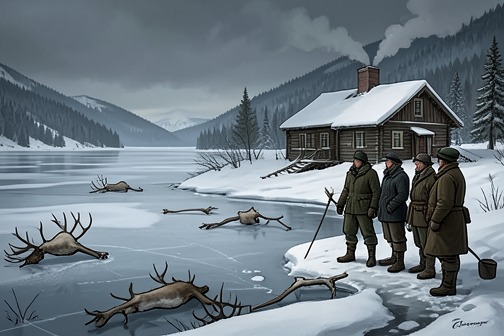
At [Brochet](entity:location-recall-location-brochet-da75501e176b), local people blamed [Wolves](entity:creature-recall-creature-wolves-f665b9881f25) for the shrinking [Caribou](entity:creature-recall-creature-caribou-c096bfb3651b) herds. A trader urged [Farley Mowat](entity:character-recall-character-farley-mowat-475ef9323420) to inspect what he called a wolf slaughter at [Fishduck Lake](entity:location-recall-location-fishduck-lake-58dae9020d2f), where he found twenty-three dead Caribou on the ice.
There were no wolf tracks, but the snow was marked by an aircraft’s skis and tail-skid, and the deer had been shot repeatedly. Farley Mowat learned that organized trophy-hunting flights had driven herds together and allowed paying hunters to shoot many animals for their antlers. He reported the incident to the authorities and received no meaningful response; the wolf bounty was later raised instead.
During the winter investigation
The Emptying Caribou Herds
[Farley Mowat](entity:character-recall-character-farley-mowat-475ef9323420) compared the public accusations against [Wolves](entity:creature-recall-creature-wolves-f665b9881f25) with the pressures he had seen firsthand: heavy human hunting, dog-food needs, and commercial trophy hunting. His findings sat uneasily beside the accounts provided to government officials by trappers and traders, who minimized their own kills.
The scale of the wider decline was stark: Canadian [Caribou](entity:creature-recall-creature-caribou-c096bfb3651b) numbers had fallen from millions in 1930 to fewer than 170,000 by 1963. The contrast between that decline and the weak official response strengthened Farley Mowat’s conviction that blaming Wolves concealed the human role in the crisis.
When the next spring approached
The Plane Returns
After many months without contact, [Farley Mowat](entity:character-recall-character-farley-mowat-475ef9323420) saw a Norseman aircraft circling over the tundra and signaled it with the smoke generators supplied for his expedition. The pilot landed at the bay while Farley Mowat learned that [Ottawa](entity:location-recall-location-3d614a6accf5) had become anxious about both his disappearance and the missing government equipment.
The [Royal Canadian Mounted Police](entity:organization-recall-organization-royal-canadian-m-5eb397731417) had searched for him, partly misled by the rumor that he was a secret agent spying on Russians near the pole. The pilot agreed to carry word of Farley Mowat’s location back to the authorities, giving him a chance to finish one last investigation before leaving.
Just before Farley Mowat left Wolf House Bay
Angeline in the Den
Before departing, [Farley Mowat](entity:character-recall-character-farley-mowat-475ef9323420) returned to the original den to measure its passage and interior. He crawled into the narrow, sloping tunnel with a weak flashlight, expecting to find it empty.
At the far end, four green reflections revealed [Angeline](entity:character-recall-character-angeline-359f8a3b0e41) and one pup pressed against the wall. Farley Mowat froze in fear, then backed out without being challenged. Once outside, he felt anger at the animals for frightening him, but soon recognized the shame beneath it: an aircraft’s roar had driven them into the den, and his own fear had momentarily erased what the summer had taught him.
As Farley Mowat prepared to leave the Barrens
The Lost World
From outside the den, [Farley Mowat](entity:character-recall-character-farley-mowat-475ef9323420) heard [George](entity:character-recall-character-george-4ccc9776b2d0) howl in the distance, calling for missing members of his family. The sound recalled the intimacy he had nearly achieved with the [Wolves](entity:creature-recall-creature-wolves-f665b9881f25) and the boundary he could not cross.
He understood that the separation came not only from the wild landscape but from his own human habits and fears. The moment became the emotional close of his field study: he had glimpsed a world in which humans were not masters, then returned to the distance imposed by his own nature.
1946, before the field expedition
The 1946 Churchill Panic
During a severe food shortage, rabies spread among foxes and [Wolves](entity:creature-recall-creature-wolves-f665b9881f25) in the region. A sick Wolf appeared near [Churchill](entity:location-recall-location-churchill-8ccaee5d516d), and a soldier’s frightened account transformed the incident into a supposed invasion of ravenous packs.
The [Canadian Army](entity:organization-recall-organization-canadian-army-715174d32a45) mobilized armed searches, during which eleven [Husky dogs](entity:creature-recall-creature-husky-dogs-644cbaeecb17), an American private, and a Chippewayan man became casualties of the vigilantes. The animal that was eventually struck by a truck was so sick it could barely move, and an aircraft’s supposed Wolf sighting turned out to be a cocker spaniel. The panic endured in local memory as proof of the very wolf danger [Farley Mowat](entity:character-recall-character-farley-mowat-475ef9323420) would later challenge.
The winter of 1958–1959 and early May 1959
Poison at Wolf House Bay
The [Canadian Wildlife Service](entity:organization-recall-organization-canadian-wildlif-03fb4f4db3ec) continued its wolf-control campaign in the [Keewatin Barrens](entity:location-recall-location-keewatin-barrens-099c5a759fda) during the winter of 1958–1959. In early May, a control officer landed at [Wolf House Bay](entity:location-recall-location-wolf-house-bay-a726eeae17d7) and placed cyanide devices and strychnine-treated bait near an occupied den.
The officer could not return to check the site because the spring thaw came early. The result was never recorded, leaving the fate of the [Wolves](entity:creature-recall-creature-wolves-f665b9881f25) near the research grounds uncertain and the book’s final warning unresolved.
Late 1972
The Public Wolf Campaign
Despite contrary advice from its own biologists, Quebec announced a public contest inviting hunters from Canada and the United States to kill 5,000 [Wolves](entity:creature-recall-creature-wolves-f665b9881f25). Prizes included wolf jawbones encased in plastic, turning the killing into a public display of supposed courage and skill.
The episode exemplified the political force of anti-Wolf pressure, even as the earlier field observations in the book challenged the claim that Wolves were a consequential danger to people or wildlife. The contest was one expression of the continuing struggle over whether Wolves would be treated as ecological participants or enemies to eliminate.
Autumn 1972
The Minnesota Extermination Plan
Minnesota game authorities proposed killing 200 [Wolves](entity:creature-recall-creature-wolves-f665b9881f25) each year until what they called the wolf menace had been eliminated. The plan threatened one of the few remaining populations in the continental United States, where only a small number of Wolves survived outside Alaska.
The proposal showed how official policy could follow political and financial pressure despite the advice of biologists. It echoed the larger pattern [Farley Mowat](entity:character-recall-character-farley-mowat-475ef9323420) had witnessed: human-caused declines were blamed on Wolves, and the proposed remedy was to kill more of them.
By 1973
A Reprieve for Ontario Wolves
After sustained campaigning by ordinary citizens and emerging biologists, Ontario revoked its provincial bounty on [Wolves](entity:creature-recall-creature-wolves-f665b9881f25). The [Ontario Wolf League](entity:organization-recall-organization-ontario-wolf-lea-01d852612dfa) had helped press the government to abandon the policy.
[Canadian and American Wolf Defenders](entity:organization-recall-organization-canadian-and-ame-99e870f1d2e1) also worked to oppose plans for extermination in Minnesota. These efforts offered a small measure of hope that public pressure could interrupt the cycle of persecution, though [Farley Mowat](entity:character-recall-character-farley-mowat-475ef9323420) warned that the Wolf’s survival remained far from secure.
1973, after the book’s publication
The Plea to Save Wolves
[Farley Mowat](entity:character-recall-character-farley-mowat-475ef9323420) reflected that the book had begun as a satire of [Homo bureaucratis](entity:concept-recall-concept-homo-bureaucratis-8e1f2b1223f5) but had been taken over by the Wolf. He argued that the animal’s behavior, once dismissed by experts as fiction, had since been confirmed in many respects, while his central claim—that [Wolves](entity:creature-recall-creature-wolves-f665b9881f25) were not a significant threat to wildlife or people—remained disputed.
He described North American Wolves as close to extinction and warned that their destruction would be another act of biocide. The book’s closing appeal was not only to preserve a species but to reconsider humanity’s claim to exclusive possession of the right to live.